
Key Takeaways
- Trust Builder: Supports public confidence in Alberta’s real estate ecosystem.
- Targeted Relief: Provides compensation only for specific legislative breaches (fraud, breach of trust, trust accounting failures).
- Accountability Mechanism: RECA pursues subrogation/recovery from the at-fault licensee after a payout.
- Time Sensitive: Claims are subject to strict one year limitation windows.
Consumer trust is the cornerstone of every real estate transaction. Whether you are helping a client buy their first home, leasing commercial space, or managing a property portfolio, your work unfolds in an environment built on professionalism, accountability, and confidence.
An essential pillar of Alberta’s consumer protection framework supporting this trust is the Real Estate Assurance Fund (the Fund). Administered by RECA under the Real Estate Act, the Fund is designed to compensate eligible financial losses in specific situations involving a licensee’s fraud, breach of trust, or failure to properly account for trust money.
As a licensee, understanding how the Fund works is vital, not only because it is a core piece of Alberta’s regulatory architecture, but because it empowers you to answer client questions accurately when serious misconduct occurs.
Why Does the Fund Exist?
Real estate transactions involve significant milestones and substantial financial sums. While the vast majority of licensees operate ethically every single day, the Fund serves as a safety net to maintain public confidence if serious, licensed; activity misconduct occurs.
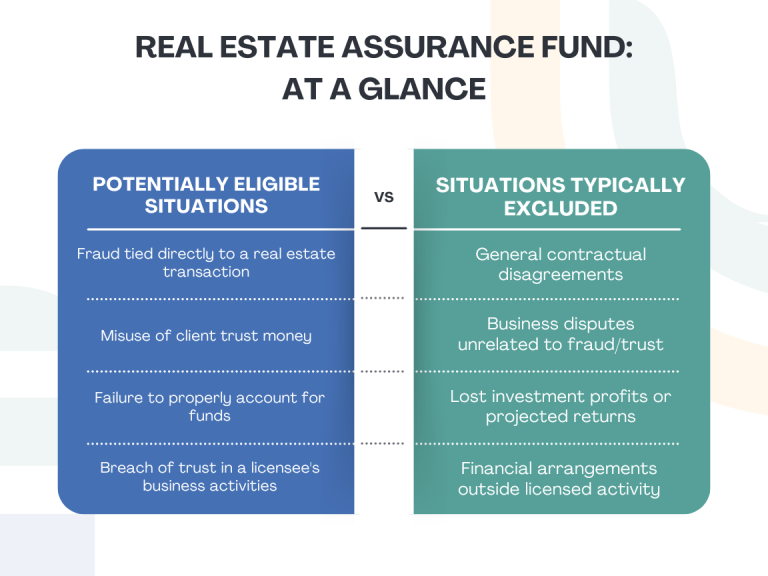
Crucial Distinction: A common misconception is that the Fund operates like general insurance. It does not. The Fund serves a specific purpose under the Real Estate Act and may provide compensation only in limited circumstances established by legislation. Market losses, contractual disputes, and other transaction-related issues generally fall outside its scope.
How is the fund is collected?
Funding for the Real Estate Assurance Fund is authorized under Alberta’s Real Estate Act. A $100 levy is currently collected from individuals entering the industry, and because the Fund has maintained its required $2 million minimum balance, broader levies have not been needed. The legislation does allow RECA to assess both new and existing licensees, if necessary, to ensure the Fund remains adequately resourced. All funds are held in trust and used to support the Fund and its administration.
When Might Compensation Be Available?
The Fund is strictly governed by the Real Estate Act and related regulations. Compensation is only considered in two scenarios:
1. Fraud or Breach of Trust
A consumer may apply after obtaining a final court judgment against a licensee involving fraud or breach of trust connected to regulated business activity.
Fraud involves dishonest conduct resulting in financial loss.
Breach of Trust involves the misuse of money or failure to meet legal obligations regarding funds or property entrusted to a licensee.
2. Mishandled Trust Money
Compensation may be available if a licensee fails to properly disburse or account for money held in trust in accordance with the Real Estate Act. Because trust money is central to real estate transactions, strict legal compliance is mandatory.
Application Realities: Timelines and Rules
Not every loss qualifies, and every application is evaluated individually based on evidence, facts, and legislative requirements. Licensees and consumers must keep the following legislated timeframes in mind:
- Who Can Apply: Generally, individuals who suffer an eligible financial loss resulting from the business activities of a licensee.
- Legislated Limitation Periods: Because the Fund is governed by the Real Estate Act, applications must be submitted within specific timeframes:
Court Judgment Claims: Must be submitted within one year after the judgment becomes final.
Trust Money Claims: Must generally be submitted within one year of the loss occurring. - Required Documentation: Applicants must provide robust evidence, which may include court documents, transaction records, supporting financial histories, and statutory declarations.
What Happens After a Payout?
If the Fund compensates an applicant, RECA doesn’t simply close the file. RECA may actively seek recovery from the licensee responsible for the loss to replenish the Fund and protect its long-term viability.
What This Means for Your Daily Practice
The Real Estate Assurance Fund isn’t just an administrative afterthought; it actively supports your business by reinforcing industry integrity.
- It Drives Consumer Confidence: When clients know that Alberta’s regulatory system has strict protections against worst case scenarios, they can enter transactions with greater peace of mind.
- It Emphasizes Best Practices: The Fund’s existence underscores why your daily attention to compliance matters. It highlights the critical importance of maintaining accurate records, following brokerage trust accounting rules, and handling deposits flawlessly.
- It Helps You Answer Tough Questions: When clients ask, “What protections exist if someone mishandles my money?” You can confidently point to the Fund as a defined, evidence-based path to recourse, while setting realistic expectations about its scope.
By staying informed about the Real Estate Assurance Fund, you reinforce your role as a knowledgeable, professional guide for Alberta consumers.